01Markers · Lipids
ApoB
Apolipoprotein B
The main protein on LDL and related particles. Each of these particles carries one ApoB molecule, so the test counts particles rather than the cholesterol inside them.
- Measured in
- Blood (serum)
- Units
- mg/dL, g/L
- Also called
- apo B, ApoB-100
AWhat moves ApoB
6 of 27 studied
Moves it5
Human studies found a change. The grade reflects the studies behind it, from A (strongest) to D.
Red yeast riceLowersGrade A
Red yeast rice lowers ApoB.
Meta-analysis or review · 11 studies linked
- Chinese red yeast rice (Monascus purpureus) for primary hyperlipidemia: a meta-analysis of randomized controlled trials. (2006)
- Safety and Efficacy of the Consumption of the Nutraceutical "Red Yeast Rice Extract" for the Reduction of Hypercholesterolemia in Humans: A Systematic Review and Meta-Analysis. (2024)
- Evaluation of the effect of a dietary supplementation with a red yeast rice and fish oil-containing nutraceutical on lipid pattern, high sensitivity C-reactive protein, and endothelial function in mod (2024)
- Low dose red yeast rice with monacolin K lowers LDL cholesterol and blood pressure in Japanese with mild dyslipidemia: A multicenter, randomized trial. (2021)
- A Randomized, Double-Blinded, Placebo-Controlled, Clinical Study of the Effects of a Nutraceutical Combination (LEVELIP DUO (2020)
- Effects of a Novel Nutraceutical Combination (Aquilea Colesterol (2019)
- +5 more studies
L-carnitineLowersGrade A
L-carnitine lowers ApoB.
Meta-analysis or review · Modest effect · 10 studies linked
4 studies in corpus; limited but direction consistent with reduced VLDL/LDL particle number. Grade C due to sparse human data.
- The effect of l-carnitine supplementation on lipid profile and glycaemic control in adults with cardiovascular risk factors: A systematic review and meta-analysis of randomized controlled clinical tri (2020)
- The effects of L-carnitine in children with kidney failure undergoing dialysis: a systematic review. (2026)
- Effect of L-carnitine supplementation on lipid profile and apolipoproteins in children on hemodialysis: a randomized placebo-controlled clinical trial. (2021)
- <scp>l</scp>‐Carnitine/Simvastatin Reduces Lipoprotein (a) Levels Compared with Simvastatin Monotherapy: A Randomized Double‐Blind Placebo‐Controlled Study (2016)
- L-Carnitine supplementation reduces oxidized LDL cholesterol in patients with diabetes. (2009)
- Effect of L-carnitine on the size of low-density lipoprotein particles in type 2 diabetes mellitus patients treated with simvastatin. (2009)
- +4 more studies
Omega-3LowersGrade A
Omega-3 lowers ApoB.
Meta-analysis or review · Small effect · 2 studies linked
BerberineLowersGrade B
Berberine lowers ApoB.
Meta-analysis or review · 6 studies linked
- Impact of Berberine or Berberine Combination Products on Lipoprotein, Triglyceride and Biological Safety Marker Concentrations in Patients with Hyperlipidemia: A Systematic Review and Meta-Analysis. (2024)
- Berberine and Adiposity in Diabetes-Free Individuals With Obesity and MASLD: A Randomized Clinical Trial. (2026)
- Berberine phospholipid exerts a positive effect on the glycemic profile of overweight subjects with impaired fasting blood glucose (IFG): a randomized double-blind placebo-controlled clinical trial. (2023)
- Effects of a New Nutraceutical Formulation (Berberine, Red Yeast Rice and Chitosan) on Non-HDL Cholesterol Levels in Individuals with Dyslipidemia: Results from a Randomized, Double Blind, Placebo-Con (2017)
- Effects of berberine on growth, liver histology, and expression of lipid-related genes in blunt snout bream (Megalobrama amblycephala) fed high-fat diets. (2019)
- Eulipidemic effects of berberine administered alone or in combination with other natural cholesterol-lowering agents. A single-blind clinical investigation. (2007)
HIITLowersGrade B
Studied, no change1
Studies looked and found no meaningful change. That is a result, not missing data.
ResveratrolNo changeGrade B
Studies of Resveratrol found no change in ApoB.
Human trials · Negligible effect · 3 studies linked
zhou_2023 reports NS at all doses. 6 corpus studies mention ApoB. See apolipoprotein_b entry. Merged.
- Comparison of Resveratrol Supplementation and Energy Restriction Effects on Sympathetic Nervous System Activity and Vascular Reactivity: A Randomized Clinical Trial. (2021)
- Resveratrol does not influence metabolic risk markers related to cardiovascular health in overweight and slightly obese subjects: a randomized, placebo-controlled crossover trial. (2015)
- Consumption of a grape extract supplement containing resveratrol decreases oxidized LDL and ApoB in patients undergoing primary prevention of cardiovascular disease: a triple-blind, 6-month follow-up, (2012)
Not studied21
No usable human study has measured ApoB with these. A gap is not a negative result: nobody has looked.
AshwagandhaCollagenCreatineFinnish saunaIronL-theanineLion's maneMagnesiumMelatoninMilk thistleNACNAD+PQQTaurineUbiquinol (CoQ10)Vitamin CVitamin D3Vitamin EVitamin K2ZincZone 2 cardio
BThe molecule
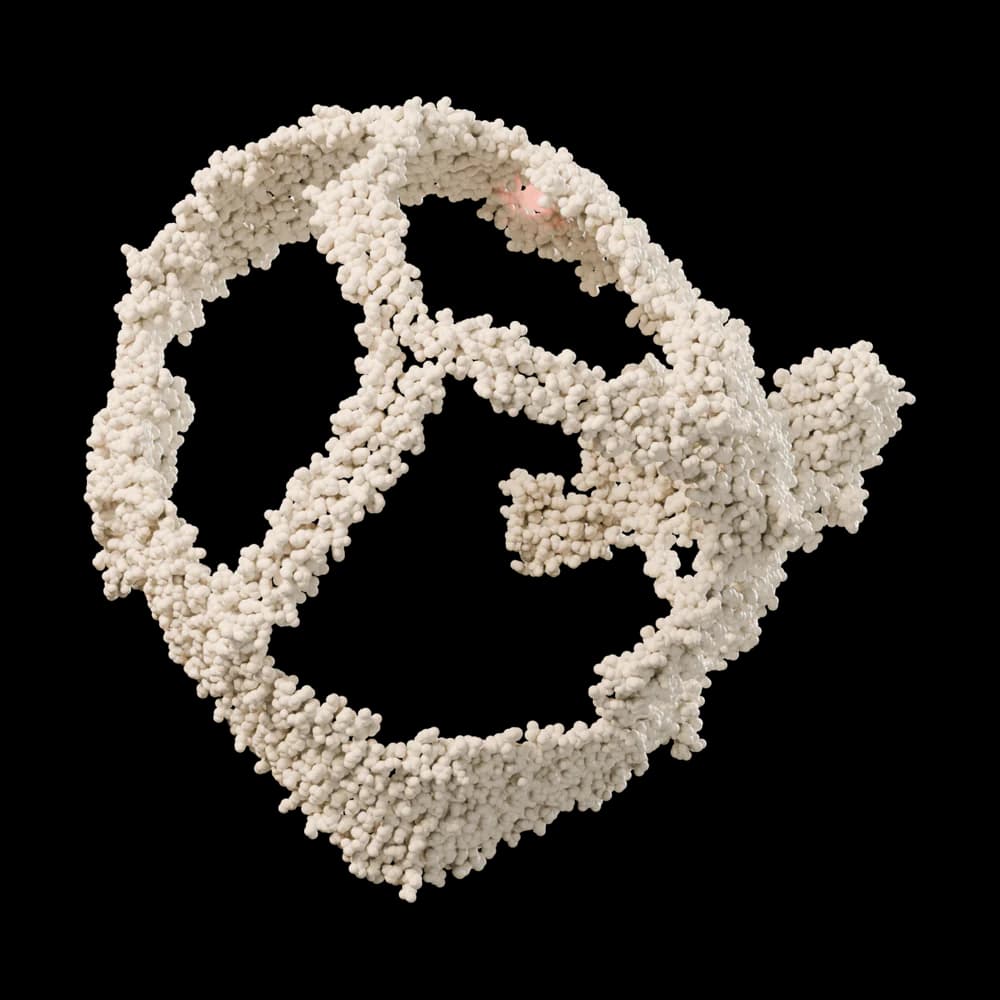
Apolipoprotein B-100 on a human LDL particle
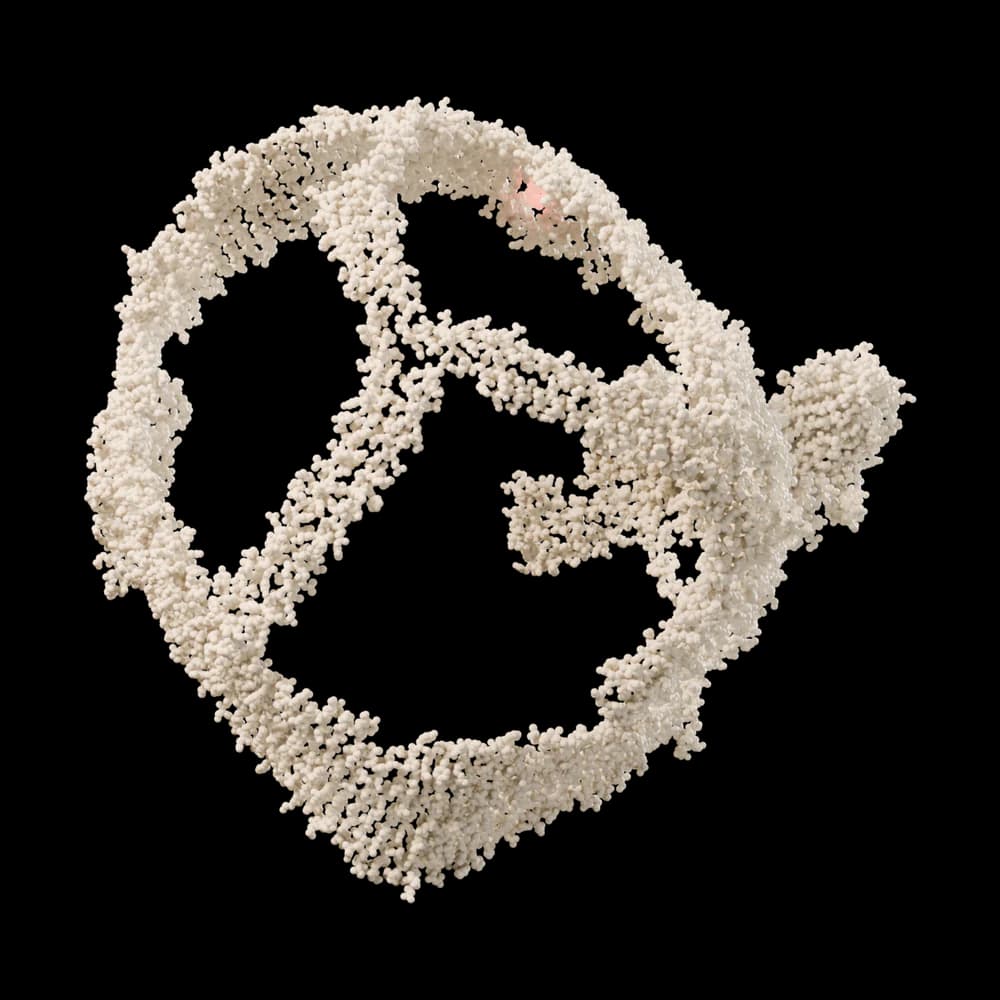
Coral: site B, the stretch that binds the LDL receptor.
Structure: PDB 9E9R · Cryo-EM, 9.0 Å · Berndsen et al., Nature 2025. Rendered from atomic coordinates in Blender; 29,417 atoms, about 27.5 nm across. Highlight source.